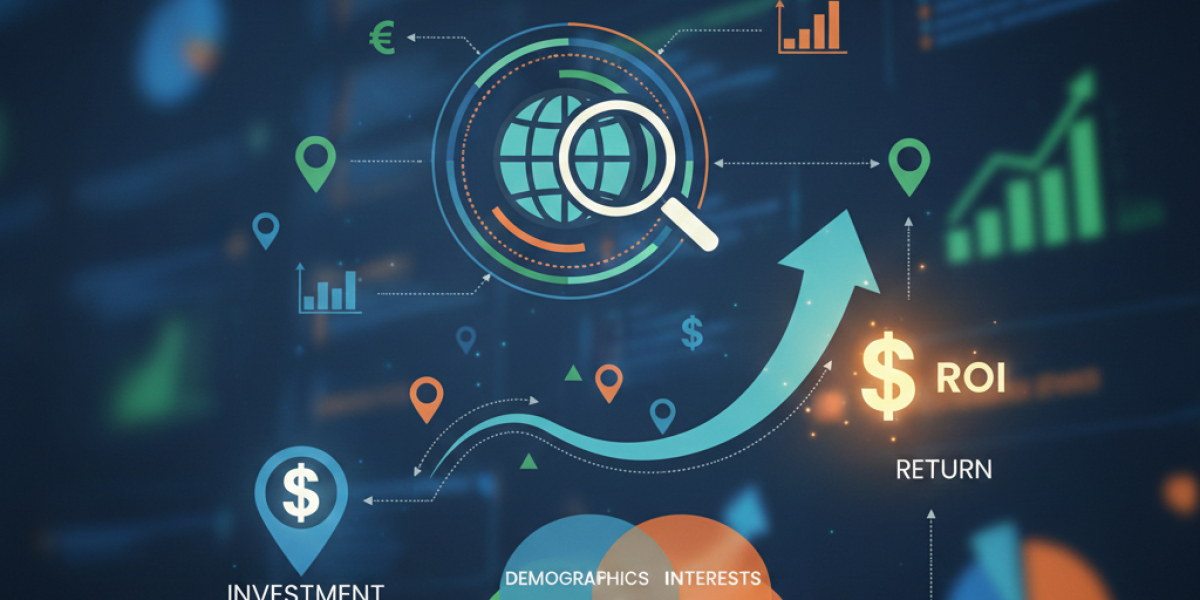
The landscape of paid advertising is no longer about simply bidding on keywords; it's about connecting a perfectly crafted message with the right audience at the exact moment of high intent. For businesses seeking a maximized Return on Investment (ROI), partnering with PPC advertising companies is the strategic move from broad spending to surgical precision.
This shift, known as Smart Targeting, transforms Pay-Per-Click (PPC) campaigns from a simple cost center into a reliable, high-yield revenue engine. Smart targeting leverages data, machine learning, and advanced segmentation to reduce waste and drive qualified conversions, ensuring every dollar of your ad spend works harder.
1.Precision Targeting: Moving Beyond Basic Demographics
The foundation of high PPC ROI is the ability to filter out non-converting clicks. PPC advertising companies achieve this by employing layered targeting strategies that go far beyond location and age.
A. Intent-Based Keyword Filtering
Smart targeting begins with forensic keyword research that prioritizes user intent over mere volume.
Focus on High-Intent Keywords: Instead of broad, top-of-funnel terms (e.g., "digital marketing"), experts focus on transactional, long-tail phrases that signal purchase readiness (e.g., "best ppc advertising services for B2B"). These keywords often have a lower volume but a vastly higher conversion rate.
Leveraging Negative Keywords: A critical, cost-saving step is compiling an extensive list of negative keywords (e.g., "free," "jobs," "DIY," "training"). This prevents ads from showing to users who are clearly not ready to buy, drastically cutting wasted ad spend.
B. Audience Segmentation and Layering
Modern PPC platforms allow PPC advertising companies to layer behavioral data onto keyword targeting for ultra-precision.
In-Market Audiences: Targeting users who are actively researching products or services similar to yours right now (e.g., showing a web application development service ad to users who have recently searched for "custom software pricing").
Custom Segments: Creating custom audiences based on users who have searched for a competitor, visited industry blogs, or used specific apps.
Geographic and Time-Based Adjustments: Optimizing bids based on performance data (e.g., bidding higher in regions or at times of day when conversions are proven to be most profitable).
2.The Role of Automation and Smart Bidding
A major driver of Smart Targeting is the implementation of AI-driven bidding strategies, which are only possible through accurate conversion tracking set up by PPC advertising companies.
A. Targeting ROAS and CPA
Smart bidding strategies use machine learning to adjust bids in real-time, focusing on the likelihood of a click resulting in a high-value conversion.
Target ROAS (Return On Ad Spend): This strategy tells the platform (like Google Ads) to prioritize auctions that promise a specific return (e.g., aiming for $4 in revenue for every $1 spent).
Target CPA (Cost Per Acquisition): This strategy ensures that the cost of acquiring a new lead or customer stays below a defined, profitable threshold.
This automation is superior to manual bidding because it analyzes billions of data signals (device, time, location, audience list) instantaneously to ensure the most efficient bid is placed, maximizing the ROI of your ppc advertising services.
B. Responsive Search Ads (RSAs)
PPC advertising companies utilize RSAs by providing multiple headlines and descriptions. The platform's AI automatically tests and serves the best combination based on the specific user’s search query and context, ensuring ad copy relevance is always maximized, which, in turn, boosts Quality Score and lowers the Cost Per Click (CPC).
3.Full-Funnel Retargeting and User Experience
Smart Targeting doesn't end with the first click; it involves a sophisticated strategy to nurture leads and ensure the user's journey is frictionless.
A. Segmented Retargeting Campaigns
Instead of simply showing the same ad to every visitor, effective ppc advertising companies segment the retargeting list:
Cart Abandoners: Highly aggressive, personalized offers (e.g., "Complete your purchase and get free shipping!").
High-Intent Visitors: Users who visited the "Pricing" or "Contact" page but did not convert. These are targeted with testimonial ads or a free consultation offer.
Blog Visitors (Awareness): Targeted with brand awareness ads or a gentle reminder to return to the site.
This personalized approach significantly increases the likelihood of conversion, as the ads directly address the user's specific stage in the buying process.
B. Landing Page Optimization (The Technical Link)
The ROI generated by smart targeting can be undone by a poor landing page. This is where the service often intersects with web application development service expertise.
Ad-to-Page Scent: The landing page must perfectly mirror the ad copy and keywords used in the PPC ad. A seamless transition reinforces relevance for the user and improves Google's Quality Score.
Speed and Mobile-First: A slow, non-mobile-friendly landing page will tank conversions, regardless of how targeted the ad was. Web application development service providers ensure lightning-fast load times and flawless mobile responsiveness, which is essential for capturing immediate conversions from mobile PPC traffic.
Clear Conversion Path: The landing page must eliminate distractions (excessive links, confusing navigation) and feature a single, clear, high-contrast Call-to-Action (CTA).
Conclusion: Smart Targeting is Strategic Investment
For business owners looking to gain a competitive edge, engaging expert ppc advertising companies means embracing smart targeting—a shift from spending money to investing it precisely. By focusing on high-intent keywords, leveraging AI-powered bidding, and integrating a high-converting user experience (often supported by a strong web application development service), businesses can expect:
Lower CPA (Cost Per Acquisition)
Higher Conversion Rates
Measurably Improved ROI
Smart targeting ensures your brand shows up exactly when a potential customer is ready to act, making your PPC budget an active partner in your company’s growth.