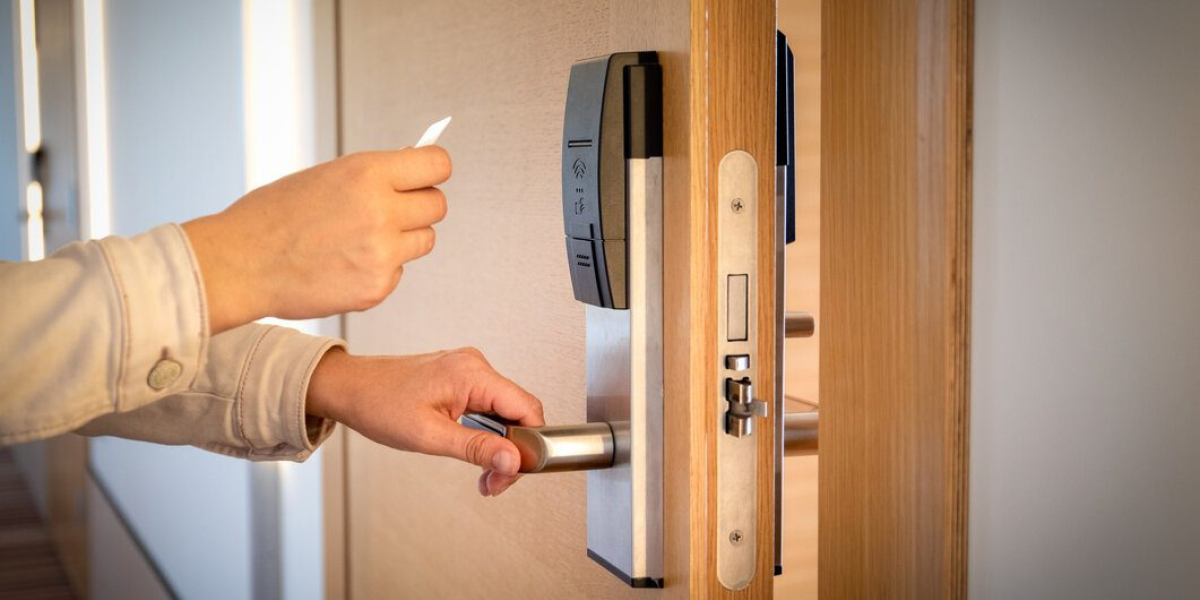
No one expects a break-in until it happens close to home—when a neighbour mentions a forced entry, when a building WhatsApp group circulates a warning, or when a security guard quietly explains that someone tried a door handle on your floor the night before. Even in a city as safe as Dubai, residents understand that home security is not something to take lightly. Most people rely on traditional locks, believing that a solid cylinder on the door is enough to keep intruders away. But the methods used in break-ins have evolved, and so have the solutions. Smart lock installation has become one of the most effective upgrades homeowners and tenants can make, not because it is trendy, but because it directly addresses the weaknesses that criminals exploit.
Traditional locks depend entirely on a physical key—a key that can be lost, copied, taken by former tenants, shared with too many people, or even forced with enough pressure. Smart locks remove these vulnerabilities by shifting the access point from a physical object to a digital system. Instead of asking, “Who has the key?” smart security asks, “Who has authorized access?” It is a subtle difference, but one that changes the entire structure of home protection.
In the last few years, Dubai residents—especially those living in high-density towers, villas with independent entrances, or communities with frequent maintenance staff—have increasingly shifted to smart lock systems because they offer something traditional locks cannot: control. Real-time, customizable control over who enters, when they enter, and how securely the door locks behind them.
But to understand why smart lock installation strengthens home security so significantly, it is necessary to examine the weaknesses of conventional locks and the strengths of something far more precise, modern, and adaptive.
The Hidden Weaknesses in Traditional Home Locks
Most people assume a break-in happens because someone “picked the lock.” In reality, break-ins often happen because the lock was outdated, worn, installed loosely, or weakened over years of use. Many older buildings in Dubai still rely on basic mechanical cylinders installed a decade or more ago. These locks were never designed to resist modern forced-entry techniques.
Even newer buildings sometimes use generic cylinders installed quickly during construction, not high-security models. These budget cylinders may look sturdy but can be bypassed more easily than residents realise. Some can be manipulated with tools. Others can be forced with physical pressure. In many cases, intruders don’t even need to damage the lock—they exploit weaknesses around the door frame or latch, areas residents never think to inspect.
Traditional keys introduce another layer of vulnerability. Anyone who has ever shared a key with building maintenance, cleaners, family members, or tenants understands how easily access spreads. Even without malicious intent, the more hands a key passes through, the less control the resident has over security.
Smart locks were designed specifically to fix these vulnerabilities.
How Smart Locks Transform Home Security
A smart lock does not rely on a physical key, which removes the most common source of breaches: key misuse or unauthorized duplication. Instead, smart locks operate on digital authentication—PIN codes, WiFi access, Bluetooth recognition, fingerprint scans, or mobile app approval.
But the greatest advantage is not just digital access—it is the intelligence built into the system.
A smart lock strengthens security by monitoring every attempt to enter. If someone tries the wrong PIN multiple times, the lock alerts the owner. If someone tampers with the device, the system detects the disturbance instantly. When the door is not fully closed or locked, the owner is notified. This kind of awareness is impossible with mechanical locks, which offer zero feedback and rely entirely on resident memory and routine.
Modern smart lock systems also use encrypted communication, meaning even if someone attempts to intercept signals, they cannot decode them. The lock communicates securely with the owner’s phone, ensuring that only authorized users ever gain access.
In a world where convenience and security rarely overlap, smart locks achieve both—precisely because they fix the biggest flaw in traditional systems: the lack of visibility.
Control That Traditional Locks Can Never Offer
Smart locks return full control of access to the homeowner. Instead of handing a physical key to visitors or service providers, residents simply share temporary access codes. These codes can be set to expire at a specific time, used once, or limited to certain days.
This is especially valuable in Dubai’s resident culture where cleaning services, maintenance technicians, property agents, and guests frequently enter homes. Smart lock owners no longer worry about who kept a key or whether someone made a copy. Every access point is recorded, monitored, and easily revoked.
Residents who travel benefit even more. Instead of hiding a spare key under a mat or handing it to a neighbour, homeowners can unlock the door remotely for trusted individuals, then lock it again with a single command.
This minute-by-minute control dramatically reduces the risk of unauthorized entry, something no mechanical lock can provide.
Why Break-Ins Fail Against Proper Smart Lock Installations
Intruders rely on speed and silence. Their strategy depends on bypassing a lock within seconds. Smart locks interrupt this strategy completely. Even if someone tries to force the door, the lock sends instant alerts. Some systems activate alarms or lights to draw attention. Others freeze access temporarily when tampering is detected.
Additionally, many smart locks include advanced sensors that detect forced pressure on the door frame or manipulation of the latch. These alerts allow residents to act immediately—calling building security, notifying guards, or checking CCTV.
It is this combination of deterrence, detection, and digital barriers that makes smart locks extremely difficult to break through.
Where traditional locks can be silently bypassed, smart locks are engineered to make intruders fail noisily, visibly, and quickly.
Why Professional Installation Matters as Much as the Lock Itself
Smart locks are complex devices. Their security depends on proper installation. A misaligned lock, a loose latch, or an incorrectly mounted deadbolt can weaken the entire system. Many DIY installations fail because homeowners underestimate how precise the alignment must be. Dubai’s doors—especially those in newer high-rises—often require custom fitting because their lock spacing differs from international standards.
A professional locksmith not only installs the device but ensures the door structure supports it. They test the lock’s engagement, verify wireless communication, align the strike plate, and update the device firmware. They also calibrate auto-locking, tamper alerts, and mobile connectivity.
This thorough setup ensures the lock performs exactly as designed, without the vulnerabilities that come from improper installation.
When installed correctly, a smart lock becomes more than a device—it becomes part of the home’s complete security network.
Smart Locks Solve Everyday Security Problems Residents Ignore
Many residents don’t think about home security until something goes wrong. But smart locks address everyday weaknesses long before they become dangerous.
One of the most common problems is forgetting to lock the door. It happens more often than people admit—especially with self-closing apartment doors in Dubai. Smart locks solve this through auto-lock features. If the door stays closed but unlocked for longer than a set time, the system locks itself automatically.
Another overlooked issue is worn mechanical keys. Over time, keys degrade, their edges flatten, and they begin to damage the lock cylinder. Smart locks eliminate this risk completely by removing the need for physical keys.
Families with children benefit as well. Instead of worrying whether kids remembered their keys or whether they lost them at school, parents can assign custom access codes and track entry times.
Residents who rent out their apartments—short term or long term—use smart locks to manage turnover without changing physical keys, enhancing safety for both tenants and property owners.
These daily conveniences, added together, create a much stronger and more reliable home security environment.
Why Door Compatibility and Lock Quality Must Be Evaluated Before Installation
Not every smart lock fits every door. Many Dubai doors use thicker wooden slabs, narrower metal frames, or European cylinder systems. A good locksmith evaluates:
• The door material
• The lock spacing
• The backset distance
• The strike plate alignment
• The cylinder shape
• The latch depth
• The presence of multi-point locking
Based on this assessment, they recommend a suitable smart lock model.
This evaluation matters because installing the wrong model can weaken the door’s structure or reduce lock reliability. A high-quality lock installed poorly is less secure than a standard lock installed correctly.
Professional assessment ensures the lock enhances security rather than compromising it.
How Smart Locks Integrate With a Modern Lifestyle
Security aside, smart locks align perfectly with the pace of life in Dubai. People here balance demanding work hours, family responsibilities, and frequent travel. Smart locks simplify routines by making access effortless.
Homeowners benefit from remote access when receiving deliveries or visitors. Tenants benefit from hands-free entry when carrying groceries or strollers. Parents benefit from entry logs that confirm when children arrived home. Frequent travellers gain peace of mind knowing they can check their door status from anywhere in the world.
Smart locks also integrate seamlessly with other modern home systems—CCTV cameras, smart doorbells, alarm systems, and lighting. When connected to a complete security network, the lock becomes part of a larger system that protects the home from all angles.
This integration is increasingly common in newer Dubai developments, where residents expect seamless technology that supports their lifestyle.
Why Break-In Attempts Fail More Frequently With Smart Locks
Smart locks drastically reduce the success rate of break-ins for several reasons:
They eliminate the possibility of unauthorized key duplication.
They provide instant alerts during forced entry attempts.
They use digital authentication that cannot be copied or guessed easily.
They incorporate sensors that detect tampering.
They include auto-locking that prevents doors from accidentally staying open.
They often require far more force and noise to bypass, which intruders avoid.
Most importantly, smart locks create a psychological barrier for intruders. A door equipped with a smart lock signals that the resident takes security seriously—and criminals tend to avoid such homes.
Break-ins happen where intruders believe they can succeed quickly. Smart locks disrupt this confidence entirely.
Conclusion: Smart Lock Installation Isn’t Just an Upgrade—It’s a Security Strategy
In a world where convenience and protection must work together, smart locks deliver both. They strengthen home security by removing the weaknesses of traditional locks and giving residents complete control over access. More than a device, a smart lock becomes a proactive security system that watches, responds, and adapts.
For anyone worried about break-ins—or simply wanting to reduce everyday vulnerabilities—smart lock installation is no longer a luxury. It is a wise, strategic decision that enhances safety, improves convenience, and future-proofs the home against modern threats.
The homes that remain safest are the ones protected not just by walls and doors, but by intelligent technology designed to stay one step ahead of risk.