
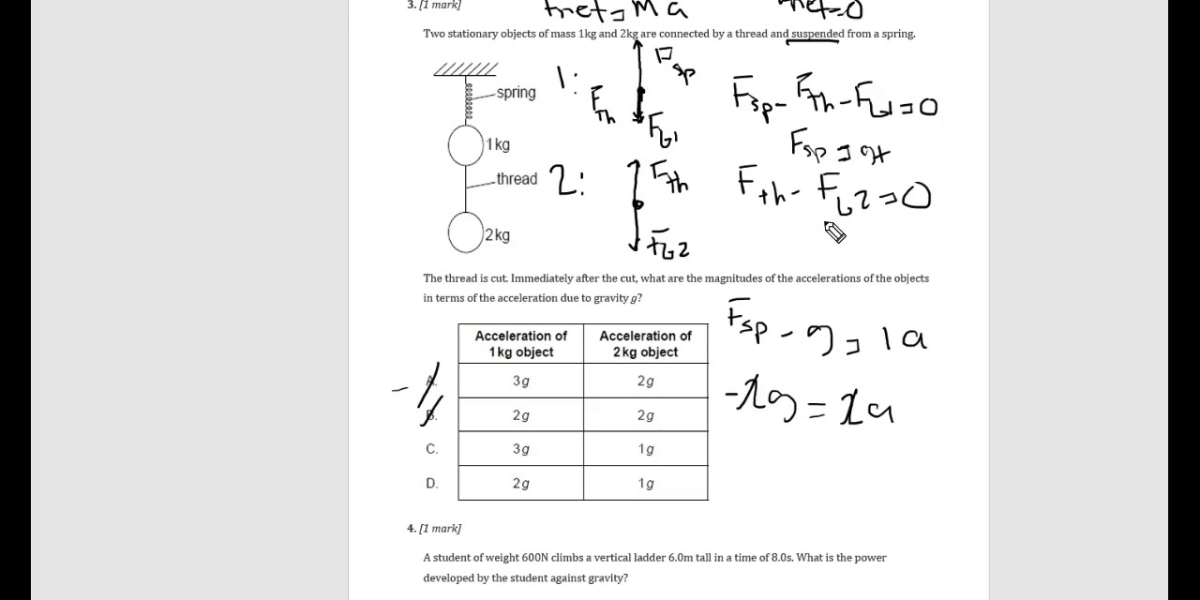
Understanding acceleration is fundamental in physics, whether you're a student tackling high school or IB physics or someone curious about the mechanics of motion. Acceleration measures how quickly an object's velocity changes over time, and it can be caused by speeding up, slowing down, or changing direction. For learners and professionals alike, a reliable tool to calculate this critical concept can make all the difference. One such powerful resource is the acceleration calculator physics, an online utility designed to simplify these calculations while ensuring accuracy and clarity.
Acceleration is defined mathematically as the change in velocity (Δv\Delta vΔv) divided by the change in time (Δt\Delta tΔt):
a=ΔvΔta = \frac{\Delta v}{\Delta t}a=ΔtΔv
Where aaa is acceleration, Δv\Delta vΔv is the difference between final and initial velocity, and Δt\Delta tΔt is the time over which the change occurs. While this formula seems simple, real-world problems often include multiple variables such as initial velocity, final velocity, displacement, or even forces acting on the object. That’s where a modern online tool comes in handy, reducing the likelihood of errors and saving significant time.
Why Acceleration Matters in Physics
Acceleration is a core concept in Newtonian mechanics. It helps explain not just everyday phenomena like cars speeding up or slowing down, but also complex motion in engineering, space travel, and sports science. By studying acceleration, students gain insights into how forces act on objects, enabling them to solve motion problems effectively. For educators, demonstrating these principles becomes easier when students can experiment with different values in a virtual calculator, immediately observing the effect on acceleration.
Accurate acceleration calculations are also crucial in experimental physics. Researchers rely on precise data to confirm theories or predict outcomes. Even a minor error in acceleration measurement can lead to significant discrepancies in results. Online calculators provide an efficient way to ensure that these calculations are both quick and reliable.
Key Formulas for Acceleration
While the basic formula a=ΔvΔta = \frac{\Delta v}{\Delta t}a=ΔtΔv covers the most common scenarios, physics includes several other formulas for calculating acceleration under different circumstances:
- Using displacement and time:
a=2(s−vit)t2a = \frac{2(s - v_i t)}{t^2} a=t22(s−vit)
Where sss is displacement and viv_ivi is initial velocity.
- From Newton’s Second Law:
a=Fma = \frac{F}{m} a=mF
Where FFF is the net force acting on the object and mmm is its mass.
- Average acceleration:
aavg=vf−vitf−tia_{\text{avg}} = \frac{v_f - v_i}{t_f - t_i} aavg=tf−tivf−vi
These formulas show that acceleration can be derived in multiple ways depending on the known quantities.
Challenges in Manual Calculations
While manual calculations are educational, they can be tedious and prone to errors. Complex problems may involve multiple steps, and students often struggle with unit conversions or keeping track of negative values for deceleration. Additionally, in laboratory experiments, slight measurement inaccuracies can skew results significantly.
How Modern Online Calculators Work
Modern online acceleration calculators are designed for user convenience. They usually feature:
- Simple input fields: Users enter known values such as initial velocity, final velocity, time, displacement, or force.
- Instant calculations: The calculator performs the necessary computations immediately.
- Unit management: Many tools allow selection of different units, automatically converting them as needed.
- Step-by-step solutions: Some calculators provide a breakdown of how the result was derived, which is highly educational for students.
By using an online utility, learners can experiment with hypothetical scenarios, such as changing the mass of an object or applying different forces, and instantly observe how acceleration is affected. This interactive approach fosters a deeper understanding of motion concepts.
Applications in Real Life
Acceleration isn’t just a classroom topic—it’s integral to many real-life applications:
- Automotive Engineering: Engineers calculate vehicle acceleration to optimize performance and safety.
- Sports Science: Athletes’ acceleration is measured to improve training methods and performance.
- Aerospace: Understanding acceleration is crucial for rocket launches and orbital mechanics.
- Robotics: Robots must be programmed with precise acceleration parameters to ensure smooth operation.
In all these fields, the ability to quickly and accurately compute acceleration can be a game-changer.
Benefits of Using an Online Acceleration Calculator
Using an online acceleration calculator offers several benefits:
- Accuracy: Eliminates human errors in calculation.
- Time-saving: Instant results mean less time spent on manual calculations.
- Learning aid: Step-by-step solutions help students understand the process.
- Convenience: Accessible from any device with an internet connection.
- Versatility: Can handle multiple scenarios including linear and non-linear motion, forces, and varying mass.
For students preparing for exams or lab work, these calculators serve as a reliable companion. They ensure that learners can focus on understanding concepts rather than getting bogged down by arithmetic.
Enhancing Learning with Visual Feedback
Many online calculators also provide visualizations. Graphs showing velocity vs. time or displacement vs. time help learners see how acceleration changes over time. Such visual tools reinforce the connection between numbers and real-world motion, making abstract physics concepts much easier to grasp.
For example, if a student inputs a scenario where a car accelerates from 0 to 60 km/h in 10 seconds, the calculator might show a velocity-time graph that slopes upward, illustrating constant acceleration. This immediate visual feedback is far more effective than static textbook examples.
Tips for Using Acceleration Calculators Effectively
While online calculators are powerful, users should still develop a solid understanding of the underlying principles:
- Know the formulas: Even when using a calculator, understanding which formula applies helps in complex problems.
- Check units: Always verify that input units are consistent to avoid errors.
- Experiment: Try different values to see how acceleration is affected by changes in velocity, time, or force.
- Use as a learning tool: Don’t rely solely on the calculator—compare its results with manual calculations to reinforce learning.
By combining traditional learning with modern tools, students can gain both speed and accuracy in their physics studies.
The Future of Physics Education
As technology continues to advance, online tools are increasingly integrated into education. Virtual labs, interactive simulations, and calculators are now standard components of modern physics curricula. They make complex concepts more accessible, engage students through interactive learning, and allow educators to focus on conceptual understanding rather than routine arithmetic.
Conclusion
Acceleration is a cornerstone of physics, essential for understanding how objects move under various forces. While manual calculations remain a vital learning tool, modern online calculators offer a practical, efficient, and highly accurate alternative. They save time, provide educational insights, and allow users to experiment with different scenarios to see the effects of varying forces, velocities, and masses.
Whether you are a student preparing for exams, a teacher demonstrating Newtonian mechanics, or a professional working in engineering or sports science, using an online acceleration calculator can enhance both learning and productivity. For those seeking a reliable and user-friendly tool,