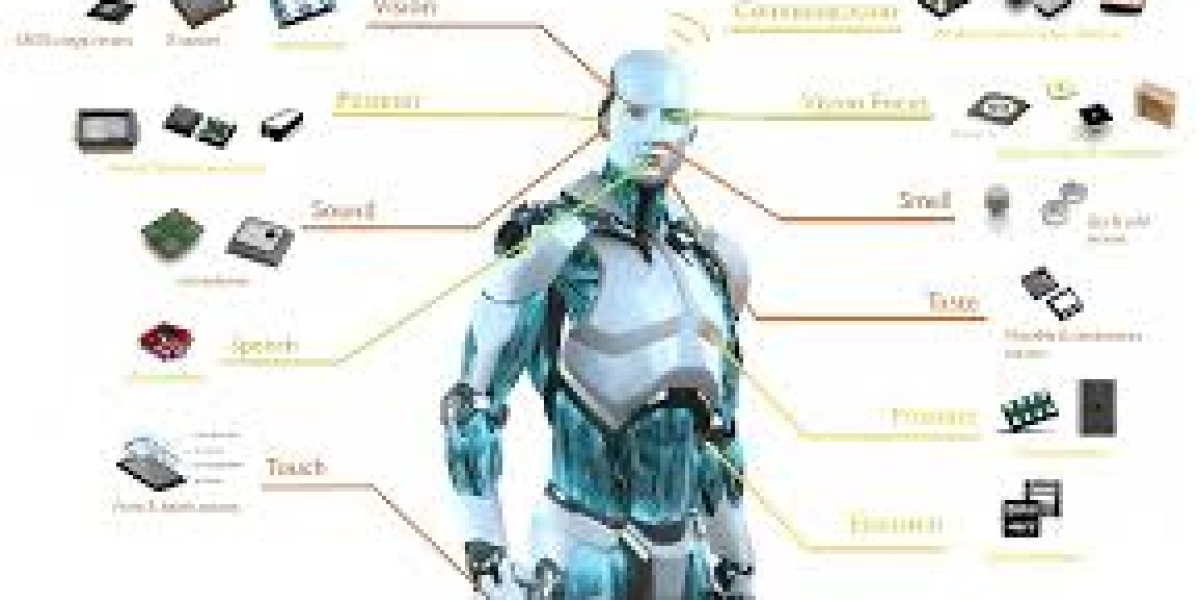
Robotics has moved far beyond simple programmed movements. Today’s robots can see, hear, touch, and respond intelligently to their environment—and at the heart of this transformation are smart sensors. These components act as the nervous system of modern robots, collecting real-time data and translating the physical world into actionable intelligence. Understanding the technology behind smart sensors reveals how robotics is evolving from automation to true autonomy.
What Makes a Sensor “Smart”?
Traditional sensors simply measure data such as temperature, distance, or pressure and pass it along to a controller. Smart sensors, however, do much more. They combine sensing elements with onboard processing, memory, and communication interfaces. This allows them to filter noise, calibrate themselves, and even make local decisions before sending data upstream.
By processing information at the edge, smart sensors reduce latency and bandwidth usage—both critical for robotics applications where split-second decisions can mean the difference between success and failure.
Key Types of Smart Sensors in Robotics
Modern robots rely on a combination of sensor types to understand their environment:
- Vision sensors use cameras and computer vision algorithms to recognize objects, track movement, and navigate complex spaces.
- Proximity and distance sensors, such as LiDAR and ultrasonic sensors, help robots detect obstacles and map surroundings.
- Force and torque sensors enable precise manipulation, allowing robots to handle delicate objects without damage.
- Environmental sensors monitor temperature, humidity, gas, and light to ensure safe operation in varying conditions.
The intelligence of a robot emerges not from a single sensor, but from how data from multiple smart sensors is fused and interpreted together.
Edge Computing and Sensor Intelligence
One of the biggest advancements in smart sensor technology is the integration of edge computing. Instead of sending raw data to a central processor, sensors now perform preliminary analysis themselves. For example, a vision sensor may identify relevant objects and discard irrelevant visual data before transmitting results.
This distributed intelligence reduces system load and improves responsiveness—an essential factor in robotics used in manufacturing, healthcare, and autonomous vehicles.
Connectivity and Data Flow
Smart sensors must communicate seamlessly with robotic control systems. Protocols such as I²C, SPI, CAN, Ethernet, and wireless standards enable fast and reliable data exchange. As robotics systems become more connected, sensors are increasingly designed to integrate with cloud platforms and enterprise software.
This connectivity opens the door to new business models. For example, robots used in retail or logistics may rely on real-time data exchange with backend systems for inventory tracking, performance monitoring, and even payment gateway API integration when robots are involved in transactional workflows.
Robotics Meets Digital Transactions
As robots move into customer-facing roles—such as automated kiosks, delivery robots, or self-service machines—their sensor systems must interact with digital payment infrastructure. Smart sensors play a role in detecting user presence, verifying actions, and ensuring secure operations.
In these scenarios, payment gateway API integration becomes a critical component of the robotics ecosystem. Sensors validate physical actions (like item pickup or service completion), while software APIs handle authentication, authorization, and payment processing. This fusion of physical sensing and digital finance enables seamless, autonomous transactions without human intervention.
AI and Machine Learning at the Sensor Level
Machine learning is increasingly embedded directly into smart sensors. Known as TinyML, this approach allows sensors to recognize patterns, detect anomalies, and adapt to changing environments over time. For robots, this means improved accuracy, reduced errors, and greater independence.
For instance, a robotic arm equipped with smart force sensors can learn optimal grip strength through repeated interactions. Over time, the robot refines its movements, becoming more efficient and safer to operate alongside humans.
Security and Reliability Challenges
With increased intelligence and connectivity comes increased risk. Smart sensors must be secure against tampering and data breaches, especially when connected to financial systems through payment gateway API integration. Encryption, authentication, and secure firmware updates are essential to protect both physical operations and digital transactions.
Reliability is equally important. Sensors must function consistently in harsh environments—dust, vibration, temperature extremes—without compromising accuracy.
The Future of Smart Sensors in Robotics
The next generation of smart sensors will be smaller, more energy-efficient, and even more intelligent. Advances in semiconductor design and AI acceleration will allow sensors to handle complex tasks independently. As robotics becomes deeply integrated into commerce, healthcare, and public services, smart sensors will serve as the bridge between physical action and digital systems.
From autonomous factories to cashier-less stores, robotics systems powered by smart sensors—and supported by seamless payment gateway API integration—will redefine how machines interact with the real world.
Final Thoughts
Smart sensors are no longer passive components; they are active participants in robotic intelligence. By combining sensing, processing, connectivity, and security, they enable robots to operate safely, efficiently, and autonomously. As robotics continues to intersect with digital infrastructure, including payments and APIs, smart sensors will remain the invisible force driving the next wave of innovation.