In the early days of automotive repair, a parasitic battery draw was usually the result of a glovebox light remaining on or a faulty trunk switch. Today, the landscape is infinitely more complex. Modern vehicles are essentially rolling computer networks, containing anywhere from thirty to over one hundred Electronic Control Units (ECUs). These modules—ranging from the Body Control Module (BCM) to the Infotainment Gateway—don't simply turn off when the key is removed. Instead, they enter various stages of "sleep" mode. A parasitic draw occurs when one or more of these modules fails to shut down, or is repeatedly "woken up" by a fault elsewhere in the network. For a technician, identifying which specific module is staying awake without inadvertently waking up the entire system is one of the most challenging tasks in modern diagnostics.
The Pitfalls of Traditional Ammeter Testing
The "old-school" method of testing for a draw involved disconnecting the negative battery terminal and placing a multimeter in series to measure amperage. While this worked for older cars, it is often catastrophic for diagnostic accuracy on modern vehicles. When you disconnect the battery, you reset the power to every ECU in the car. When you reconnect through the meter, you "wake up" every module, initiating a boot-up sequence that can pull several amps. Furthermore, many modern parasitic draws are intermittent. If you break the circuit to insert your meter, the fault may disappear, only to return once the customer takes the car home. This creates a cycle of frustration for both the shop and the vehicle owner.
To avoid these pitfalls, technicians now use "non-intrusive" testing methods. The goal is to keep the vehicle in its natural, "undisturbed" state. This means the battery remains connected, and the modules are allowed to enter their natural sleep cycles, which can sometimes take up to sixty minutes. Learning the specific sleep-cycle signatures of different manufacturers is a key skill taught in a professional car mechanic course. By understanding how a vehicle's network "goes to bed," a technician can accurately distinguish between a normal power-down sequence and a genuine electrical fault that is bleeding the battery dry.
Voltage Drop Testing Across Fuses
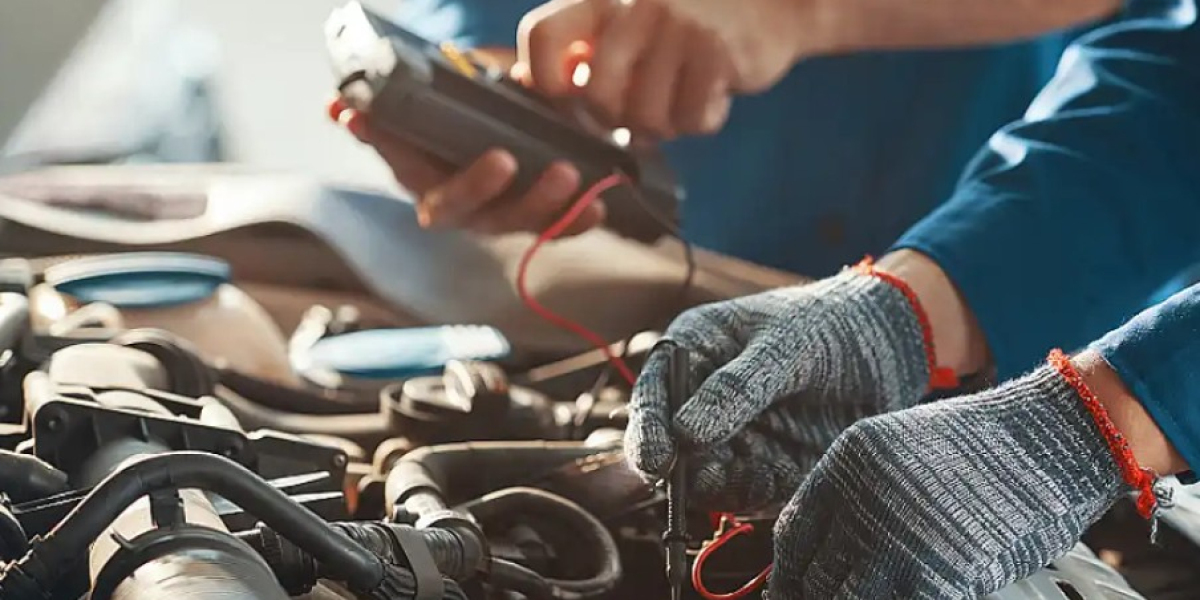
The gold standard for modern parasitic draw testing is the "Voltage Drop Across Fuses" method. Instead of breaking the circuit, the technician measures the tiny amount of millivolts ($mV$) dropping across the top of a fuse while the car is off. Because every fuse has a known resistance, a voltage drop indicates that current is flowing through that specific circuit. By using a standard conversion chart, you can translate those millivolts into milliamps ($mA$) without ever pulling a fuse. Pulling fuses to check for a draw is now discouraged because the act of removing and reinserting a fuse can wake up a sleepy ECU, rendering the rest of your test invalid.
This technique requires a steady hand and a high-quality digital multimeter capable of reading down to $0.01\text{ mV}$. It also requires patience; you must latch all doors and the hood, simulate a "locked" state, and wait for the bus communication to cease. Professionals who have completed a car mechanic course are trained to use these conversion charts and to understand which circuits (like the clock or anti-theft) should have a small, "keep-alive" draw versus those that should be at absolute zero. This surgical approach allows the technician to pin down the offending circuit in a fraction of the time it would take using older, more invasive methods.
Utilizing Thermal Imaging for Rapid Identification
As technology advances, thermal imaging has become a powerful ally in the fight against parasitic draws. Since electrical current generates heat, an ECU or a component that is stuck "on" will typically be slightly warmer than its surroundings. By using a high-resolution thermal camera, a technician can scan the fuse box or the vehicle's interior after it has sat for an hour. An active module will often glow as a "hot spot" against the cool background of the dormant components. This doesn't replace the multimeter, but it acts as a "shortcut" to find the general area of the fault, saving the technician from testing every single fuse in multiple locations.
Thermal imaging is particularly useful for finding draws in components that aren't easily accessible, such as a faulty seat heater element or a stuck relay hidden deep behind the dashboard. However, interpreting thermal data requires a solid grasp of automotive electrical theory. For instance, some modules stay warm as part of their normal operation for a set time after the engine is turned off.
Advanced Network Analysis and the Oscilloscope
Sometimes, the draw isn't caused by a component staying on, but by a "chattering" network. If one ECU on the CAN bus is faulty, it can send out "keep-alive" signals that prevent all other modules on that network from sleeping. In these cases, your multimeter might show a fluctuating draw that seems to come from everywhere at once. This is where the oscilloscope becomes necessary. By probing the communication lines, a technician can see the "digital conversation" happening. If the scope shows activity on the bus long after the car should be asleep, you know you have a "network wake-up" issue rather than a simple short to ground.
Diagnosing at the data level is the pinnacle of modern automotive repair. It involves isolating different branches of the network to see which specific module is talking when it should be silent.
Conclusion: The Path to Electrical Expertise
Testing for parasitic draws in modern, ECU-heavy vehicles is a testament to how far automotive technology has come. It is no longer a task for the "parts changer" but for the electrical specialist. By moving away from intrusive ammeter testing and embracing voltage drop measurements, thermal imaging, and network analysis, technicians can accurately diagnose even the most elusive battery drains.