Small gardens can be just as charming and expressive as larger landscapes when designed thoughtfully. One feature that often surprises homeowners with its impact is a garden bridge. While bridges are commonly associated with expansive gardens and flowing ponds, the right design can work beautifully in compact outdoor spaces too. A garden bridge adds structure, visual interest, and a sense of journey, even in the smallest setting. The key is choosing a design that enhances the space without overwhelming it. This article explores the best garden bridge designs for small gardens and how to use them effectively.
Understanding the Role of a Garden Bridge in a Small Space
In a small garden, every element must serve a purpose. A garden bridge doesn’t always need to cross water; it can span gravel beds, dry streams, stepping stones, or simply act as a decorative focal point. In compact layouts, bridges help guide the eye, create separation between zones, and introduce height variation without taking up much ground area.
When chosen correctly, a bridge can make a small garden feel more layered and intentional rather than crowded.
Flat Wooden Garden Bridges
Flat wooden garden bridges are one of the most practical choices for small gardens. Their low-profile design avoids visual clutter while still offering the classic charm associated with garden bridges.
These bridges typically feature straight planks and minimal railings or no railings at all. Because they sit closer to the ground, they blend naturally into pathways or gravel features.
Why they work well in small gardens:
Simple design keeps the space feeling open
Easy to integrate into pathways or dry stream beds
Suitable for modern and traditional garden styles
Flat bridges are ideal if you want subtle structure without dominating the landscape.
Arched Garden Bridges with Slim Rails
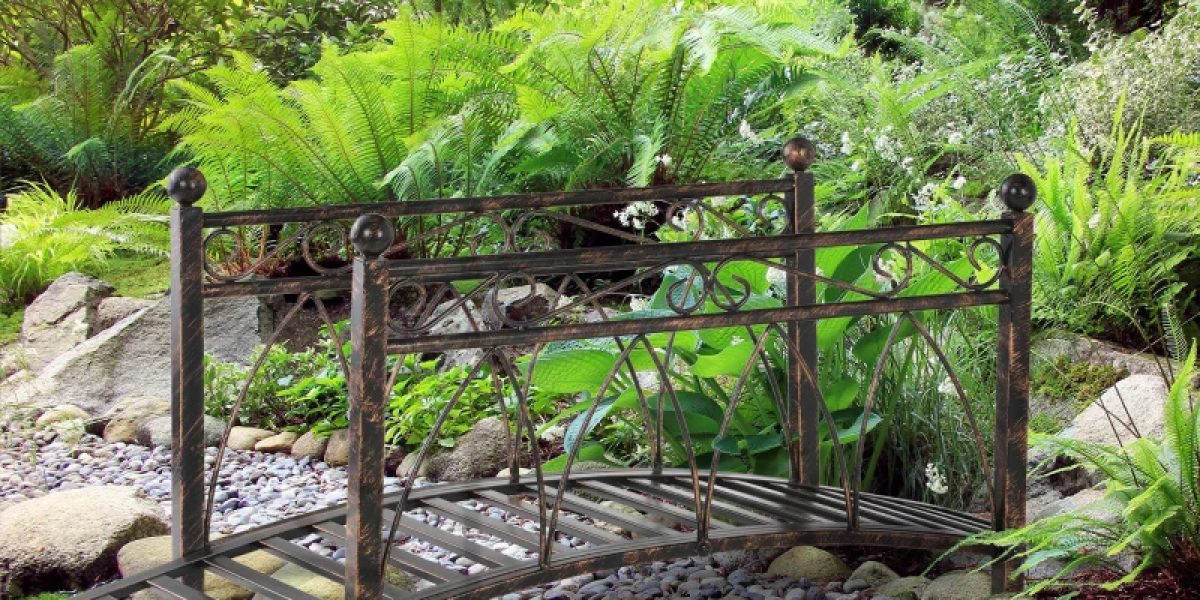
A gentle arch can add elegance even in limited space, as long as the proportions remain modest. Slim arched garden bridges create vertical interest without feeling bulky, especially when paired with narrow railings.
In small gardens, shallow arches are preferable to steep curves. They create a sense of flow while maintaining accessibility and balance.
Best uses:
Over small ponds or pebble features
Between lawn sections and seating areas
As a visual centerpiece near plants or shrubs
When placed thoughtfully, an arched bridge becomes a charming highlight rather than an obstacle.
Metal Garden Bridges for a Lightweight Look
Metal garden bridges are excellent for small gardens because of their slim frames and open construction. Unlike heavier wooden designs, metal bridges often use thin rails and open patterns that allow light to pass through.
This visual lightness helps prevent the garden from feeling cramped. Metal bridges also suit contemporary gardens, courtyards, and minimalist outdoor designs.
Advantages in compact spaces:
Sleek structure reduces visual bulk
Works well with stone, concrete, and gravel
Often requires less maintenance
Metal bridges are particularly effective in urban gardens or modern outdoor layouts.
Rail-Free Garden Bridges
Bridges without side rails are ideal for very small gardens. By removing vertical elements, the bridge becomes part of the ground plane rather than a dominant feature.
Rail-free designs work especially well when the bridge is purely decorative or spans a shallow feature. They also create a seamless transition between different areas of the garden.
Ideal scenarios:
Dry creek beds
Gravel or bark pathways
Zen or Japanese-style gardens
This design keeps the garden feeling open and uncluttered.
Japanese-Inspired Garden Bridges
Japanese garden bridges are known for their elegance, balance, and simplicity. In small gardens, these designs can introduce a calm, refined atmosphere without overwhelming the space.
Many Japanese-style bridges feature gentle curves, natural wood finishes, and minimal detailing. They are often used symbolically, representing transitions or journeys rather than functional crossings.
Why they suit small gardens:
Emphasis on harmony and proportion
Minimalist detailing enhances visual calm
Works beautifully with stones, moss, and water features
These bridges pair well with compact meditation gardens or tranquil outdoor corners.
Garden Bridges as Decorative Accents
In very small gardens, a bridge doesn’t always need to be functional. Decorative garden bridges can be placed over plant beds, stones, or even as standalone features.
Using a bridge purely as an accent allows you to enjoy its aesthetic value without worrying about foot traffic or clearance. Decorative bridges also help define visual pathways through the garden.
Creative placement ideas:
Over ground-cover plants
At the entrance to a garden path
Between contrasting textures like grass and gravel
This approach is perfect when space is extremely limited.
Choosing the Right Materials for Small Gardens
Material choice plays a major role in how a bridge feels within a small space. Lighter materials and neutral finishes tend to blend better than dark or bulky designs.
Recommended materials:
Light-toned wood for warmth and natural flow
Powder-coated metal for modern gardens
Weather-resistant finishes to reduce maintenance
Avoid oversized beams or thick railings, as they can visually shrink the garden.
Smart Placement Tips for Compact Gardens
Even the best-designed bridge can feel out of place if positioned poorly. In small gardens, placement matters just as much as design.
Helpful placement tips:
Align the bridge with natural walking paths
Avoid placing it too close to walls or fences
Use surrounding plants to soften edges
Keep sightlines clear to maintain openness
Proper placement ensures the bridge enhances movement rather than interrupting it.
Balancing Style and Function
While aesthetics are important, the bridge should still feel appropriate for its environment. In small gardens, less is often more. Choosing a bridge that complements existing elements rather than competing with them will result in a more cohesive design.
Think of the bridge as part of the overall garden story, not just a standalone feature.
Conclusion
Garden bridges can be a beautiful addition to small gardens when chosen with care. From flat wooden designs and slim arched bridges to modern metal options and rail-free styles, there are many designs that suit compact outdoor spaces. The key lies in selecting a bridge that feels light, proportional, and purposeful. With thoughtful design and placement, a garden bridge can add charm, structure, and a sense of flow, transforming even the smallest garden into a visually engaging and inviting space.