
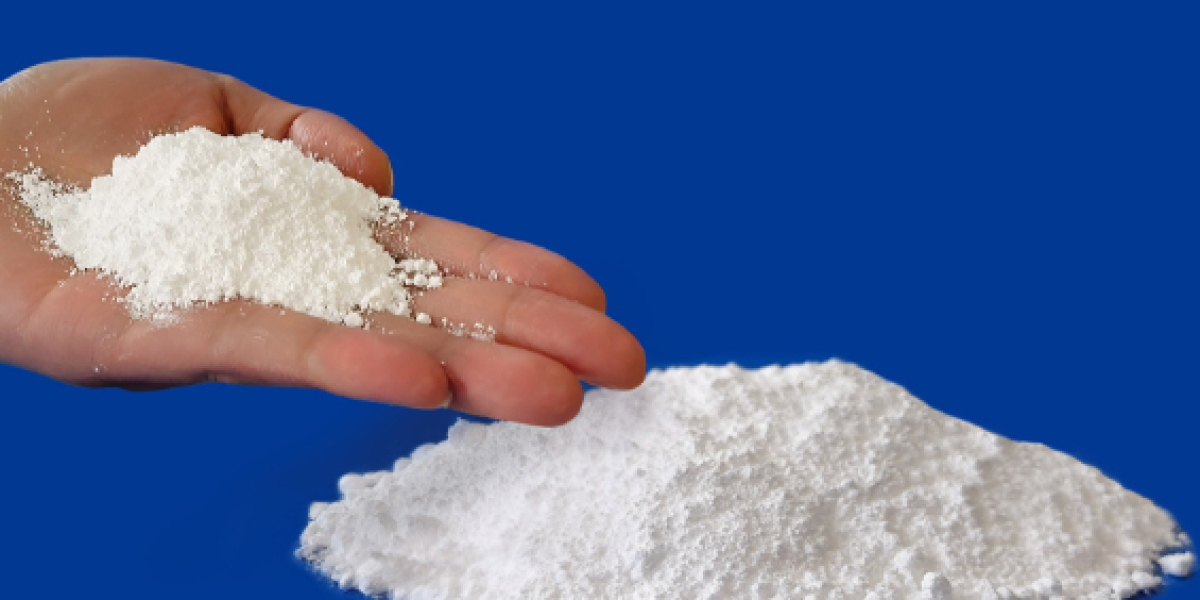
Polyvinyl chloride (PVC) is one of the most widely used plastics in the world, finding applications in construction, healthcare, automotive, packaging, and consumer goods. The quality and performance of PVC largely depend on the manufacturing process, especially suspension polymerization. At the heart of this process lies an essential additive known as the PVC suspending agent. This material plays a crucial role in controlling particle formation, stability, and overall resin quality.
What Is a PVC Suspending Agent?
A PVC suspending agent is a water-soluble polymer added during the suspension polymerization of vinyl chloride monomer (VCM). Its primary function is to stabilize vinyl chloride droplets in water, preventing them from coalescing during polymerization. By doing so, it ensures the formation of uniform PVC particles with controlled size and morphology.
Common PVC suspending agents include polyvinyl alcohol (PVA), cellulose derivatives, gelatin, and other modified polymers. Among these, PVA-based suspending agents are the most widely used due to their excellent stabilizing properties and consistency.
Role of PVC Suspending Agent in Suspension Polymerization
In suspension polymerization, VCM is dispersed in water under agitation. The PVC suspending agent adsorbs onto the surface of monomer droplets, forming a protective layer that maintains droplet separation throughout the reaction. This stabilization is critical for achieving uniform heat transfer and preventing unwanted agglomeration.
The suspending agent directly influences particle size distribution, porosity, and bulk density of the final PVC resin. These properties, in turn, affect processing behavior during extrusion, molding, or calendaring.
Importance of Particle Size Control
One of the key benefits of using an effective PVC suspending agent is precise particle size control. Fine, uniform particles improve resin flow, enhance plasticizer absorption, and provide better fusion characteristics during processing. This is especially important for applications such as pipes, profiles, films, and medical-grade PVC.
Poor suspension stability can result in oversized or irregular particles, leading to processing defects and inconsistent product performance. Therefore, selecting the right suspending agent is critical for high-quality PVC production.
Types of PVC Suspending Agents
PVC suspending agents are generally classified based on their chemical structure and performance characteristics.
Polyvinyl alcohol-based agents are preferred for their excellent emulsifying ability, controlled hydrolysis levels, and predictable behavior during polymerization. They offer superior dispersion stability and allow customization of resin properties.
Cellulose-based suspending agents provide good stabilization but may have limitations in controlling fine particle distribution compared to PVA. Other natural or synthetic polymers are also used in niche applications where specific resin characteristics are required.
Advantages of Using an Efficient PVC Suspending Agent
Using a high-quality PVC suspending agent offers multiple advantages. It improves process stability, reduces reactor fouling, and ensures consistent polymerization kinetics. Better suspension control also enhances heat removal, reducing the risk of runaway reactions.
Additionally, PVC suspending agents help achieve clean reactor operation and easier washing of finished resin. This leads to higher productivity, reduced downtime, and lower maintenance costs in industrial PVC plants.
Impact on Downstream Processing
The influence of a PVC suspending agent extends beyond polymerization. The resulting resin properties affect downstream processing such as extrusion, injection molding, and compounding. Uniform particle morphology improves plasticizer uptake, leading to better flexibility and mechanical performance in finished PVC products.
For rigid PVC applications, optimized suspending agents help achieve higher strength and dimensional stability. In flexible PVC, they contribute to smooth processing and consistent product quality.
Choosing the Right PVC Suspending Agent
Selecting the appropriate PVC suspending agent depends on factors such as reactor design, agitation speed, polymerization temperature, and targeted resin properties. Manufacturers often use blends of suspending agents to fine-tune performance and achieve specific particle characteristics.
Close collaboration with raw material suppliers and thorough process trials help optimize suspending agent selection for reliable and efficient PVC production.
Conclusion
A PVC suspending agent is a vital component in suspension polymerization, directly influencing resin quality, process efficiency, and end-use performance. By ensuring stable monomer dispersion and controlled particle formation, it enables manufacturers to produce high-quality PVC resins tailored to diverse applications. As PVC technology continues to evolve, advanced suspending agents will remain essential for consistent, efficient, and scalable PVC manufacturing.