
In modern manufacturing, machine precision determines product quality and production efficiency. However, many factories still face unexpected downtime due to bearing overheating or failure under combined loads. These issues often begin with selecting a bearing type that cannot handle both radial and axial forces effectively.
As spindle speeds increase in CNC machines and automation systems, traditional bearing designs struggle to maintain stability. Excess vibration, shaft displacement, and thermal expansion gradually reduce machining accuracy. For engineers, even a small deviation can result in rejected parts and costly rework.
This is why selecting the right angular contact bearing is critical for high-speed and high-precision equipment. Designed to manage combined loads with superior rigidity, it plays a key role in maintaining consistent rotation, smooth motion, and long-term operational reliability.
The Growing Problem of Bearing Failure in High-Speed Machinery
High-speed equipment operates under complex load conditions. Common challenges include:
Combined radial and axial loads
Continuous high RPM
Heat buildup from friction
Misalignment under dynamic stress
When standard bearings are used in such environments, they often fail prematurely. This results in maintenance interruptions, increased spare part costs, and production delays.
What Is an Angular Contact Bearing?
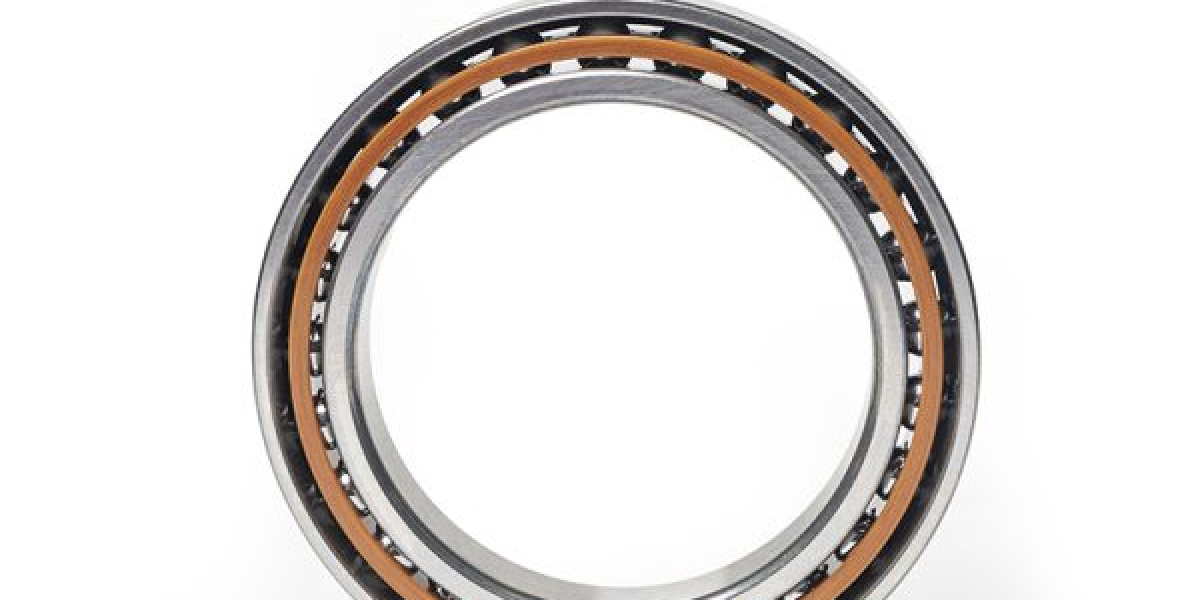
An angular contact bearing is specifically engineered to handle both radial and axial loads simultaneously. Its raceways are designed so that the contact angle between the rolling elements and the rings allows force to transfer efficiently.
Unlike deep groove bearings, this structure supports higher axial loads and operates effectively at elevated speeds. It is commonly used in precision machinery where rigidity and rotational accuracy are essential.
How Angular Contact Bearings Work
The key principle lies in the contact angle. When force is applied, loads are transmitted along this angle, improving axial load capacity.
Main working characteristics:
Single-row types support axial load in one direction
Matched pairs handle bidirectional axial loads
Preload options enhance rigidity and reduce vibration
This design ensures better shaft support and improved rotational accuracy under demanding conditions.
Limitations of Traditional Bearing Solutions
Many older systems rely on deep groove ball bearings because of their versatility and lower cost. However, these bearings:
Have limited axial load capacity
Generate more heat at high speeds
Provide lower rigidity
Struggle in precision spindle applications
Over time, these limitations cause vibration issues and shorten equipment lifespan.
How Angular Contact Bearings Solve These Issues
Angular contact bearings improve system performance by:
Enhancing axial load handling
Supporting higher speed ratings
Offering customizable preload configurations
Reducing vibration and operational noise
Their precision-ground raceways and optimized internal geometry ensure smoother rotation and stable torque transmission.
Key Features Industrial Buyers Should Evaluate
When sourcing bearings for industrial use, focus on:
Contact angle (15°, 25°, 40° depending on application)
Dynamic and static load ratings
Speed limit and lubrication compatibility
Material quality and heat treatment
Precision class (P4, P5, etc.)
Choosing the right configuration improves machine stability and reduces long-term costs.
Comparison: Angular Contact vs Standard Bearings
| Factor | Angular Contact Bearing | Deep Groove Bearing |
|---|---|---|
| Axial Load Capacity | High | Moderate |
| Speed Capability | Excellent | Good |
| Rigidity | High | Medium |
| Precision Use | Ideal for spindles | General use |
| Heat Resistance | Better at high RPM | Limited |
This comparison shows why high-speed applications often require specialized designs.
Real Industrial Applications
Angular contact bearings are widely used in:
CNC machine tool spindles
Electric motors
Pumps and compressors
Automotive transmission systems
Robotics and automation equipment
In these industries, precision and reliability directly affect productivity and output quality.
Why Manufacturers Prefer Angular Contact Bearings
Manufacturers prioritize long-term performance. By using the correct angular contact bearing, they gain:
Reduced downtime
Improved machining accuracy
Lower vibration levels
Extended maintenance intervals
These advantages translate into measurable cost savings and stable production output.
How to Select the Right Angular Contact Bearing
Selecting the correct bearing requires technical evaluation. Consider:
Load type and magnitude
Required rotational speed
Mounting arrangement (single, duplex, or tandem)
Lubrication method
Environmental conditions
Working with an experienced supplier ensures the right match between design requirements and bearing specifications.
Conclusion
In high-speed industrial systems, bearing choice is not a minor decision. It directly affects accuracy, durability, and machine reliability. Standard solutions may work for general applications, but precision machinery demands specialized design.
Angular contact bearings provide superior load management, high-speed stability, and improved rigidity. For manufacturers aiming to reduce downtime and enhance efficiency, selecting the correct bearing type is a strategic investment in long-term operational success.